Pages

Showing posts with label Motoring Tips. Show all posts

Monday, 5 May 2014

Smart Motorway

Smart Motorway - This picture shows a four lanes where their was once 3 lanes and a hard shoulder. No hard shoulder and a refuge area.  
30th April saw the end of works between Junction 5 to 7 on the M25. And it couldn't come any sooner.

This section of the M25 is now a smart motorway and their are many changes along this section. Firstly, installation of new gantries and new gantry signs. New barrier's. Refuge areas and no hard shoulder.

But first what is a 'Smart Motorway'

Their are three types of smart motorways in the UK.

Controlled motorway — Controlled motorways have three or more lanes with variable speed limit's displayed on overhead gantry signs. These signs are traditional speed limit signs with a red circle around the number. The limit must be adhered too. The hard shoulder is never opened and should only be used in a genuine emergency just like standard motorway sections. [M25 Heathrow section.]

Hard shoulder running — The hard shoulder will be opened at busy times and the speed limits will be reduced. Limits are displayed on overhead gantries, as mandatory limits. Regular refuge areas are dotted along the route to aid in emergency if the hard should is opened. Do NOT use the hard shoulder unless overhead signs show that you can do so. [M42, M6 Birmingham area]

All Lane running — There is no hard shoulder on these sections of motorway. Speed limits vary with overhead gantry signs on display and emergency refuge areas are dotted along the route.

Many drivers have faced miserable journey's doubling or even tripling journey times through the road work section. Brake downs and accidents have had no refugee and thus blocking lanes and on some occasions the whole motorway. It's all been in aid of creating the smart motorway
This image showing one of the side gantries that will give 
information about traffic conditions and lane / speed operation

As drivers in the South East know, road works on the M25 have been on going for some time now. Many drivers have faced miserable journey's doubling or even tripling journey times through the road work section. Brake downs and accidents have had no refugee and thus blocking lanes and on some occasions the whole motorway. It's all been in aid of creating the smart motorway section. And the story is similar in Essex too. The cost to the project along the southern stretch past Clacket Lane is around the £125 000 mark. Expensive work, but a lot cheaper then widening the motorway. Trials have shown in the Midlands that it has given reliable journey times through the section and reduced accidents and the fact the traffic is moving steadily the environment has benefitted too with less emissions from vehicles stoping and starting in heavy traffic jams.

How does one drive through the smart motorway? Easy really. When the gantry signs show a different speed limit other then 70 mph, reduce your speed. It's recommended to stay in lane, however it is better to keep left, keeping to the near side line is in fact the correct method on any motorway and of course if the lane turns into a drop lane, and it's not your junction move into the correct lane in good time. Keep an eye on the gantry direction signs. This insures you'll not be making last second lane changes. However keep an eye on though's who haven't paid attention to the directions.

When a speed limit sign is displayed over the hard should it means it's open. You can drive on it. Check your mirrors indicate left, and move into the hard shoulder. Keep to the posted speed limit. You may find traffic in your lane starts to travel faster or is less congested then other lanes. That's fine. Keep to the speed your comfortable with but within the limit. Try not hold traffic up behind if it's clear in front however, it will only provoke tailgating. Some parts of the hard should becomes part of the slip road for the following junction. Also known as a drop lane. Signs above the lane will indicate so. Again keep an eye on the signs, check mirrors, indicate and move into the next lane in good time. If a red X is displayed, do not use the hard shoulder. It is against the law and a fine could be heading its way in the post. Only use the hard shoulder in an emergency. And if a sign above the hard should is not displayed. Again the hard shoulder is not open.

Smart motorways where the options for the hard shoulder might be open or it's an all lane running motorway - will have refuge areas. If at all possible, use these in an emergency, even if the hard shoulder is closed to running traffic. Having the empty lane next to you during your emergency only helps to keep you and your passengers a little safer.
Image showing the full width gantry

Some of these stretches have sensors built into the road and may automatically active speed limit restrictions. You may think that the section is clear, but up ahead it may not and the gantry signs are there to slow traffic down for safety and also to try and regulate the traffic flow. On the whole these sensors do a fairly good job.

Smart motorways are monitored heavily by the highways agency. Cameras dotted along the route are trained on the road and controllers monitor the video feeds 24/7. Controllers can also override the road speed sensors, depending on traffic conditions and any emergency circumstance that may be up ahead.

On the whole, smart motorways are their to help drivers continue their journeys, avoid heavy congestion and reduce accidents. Keep and eye on the signs, stick within the speed limits and you really can't go wrong.

Download the Highway's agency's leaflet regarding this section of the M25.

Information source: Highway Agency


Thursday, 1 May 2014

Don't risk a BBQ booze drive ban

We're all aware of the risks of drink-driving at Christmas, but drink-drive casualties actually peak in the summer. When enjoying a leisurely lunchtime or evening barbeque with friends and family, the measures are likely to be larger and the drinks stronger than those served in a pub, and it's easy to get carried away.

Beware the quick drink after work. One pint with your colleagues in the sun might seem harmless but it can quickly turn into two, then three. Get a taxi, train or walk – it'll cost much less than a drink-drive charge or accident. And ignore peer pressure. Your companions might think it's a good idea for you to drive them home, but if you've been drinking just say no. It's your licence at stake.

Driving with good intentions to a party, to a pub or to a restaurant and then just having a drink or two, puts more pressure on you to risk driving home, even if you're not sure whether you are below the limit. You are likely to be breathalysed if you are involved in a collision, even if it is not your fault. Whether or not you think you're fit to drive, don't take the chance or somebody else's mistake might become your problem.

How much did you drink last night? A drinking session the night before could put you over the legal limit the next day.

Figures from the Department for Transport indicate that while the overall number of accidents involving drink driving has fallen over the past 20 years, the proportion of morning-after accidents has risen from 7 per cent in 1990 to 18 per cent in 2010. Bear this in mind and make alternative transport plans for the next day – don't just risk it.

Many accidents also involve drunk pedestrians. Watch out for them when you're driving.

Summer or winter, if you drink, don't drive and if you drive, don't drink. And always refuse a lift from someone you know has been drinking.

Monday, 14 April 2014

Parking tips from the IAM

Many people struggle with parking, it's the manoeuvre that many people dread but unfortunately it's something we'll all just have to live with. While I can't show you how to achieve the perfect parallel park here, I can give you some advice on doing it as safely as possible.

You should always park on the left-hand side of the road. The Highway Code states 'do not park facing against the traffic flow', and at night this is a legal requirement, unless you are in a recognised parking space.

When looking for a parking space, drive slowly past a potential parking space and size it up to see if the car will fit. If you have a car on your tail, don't slam on the brakes and stop. If you have to carry on past it and turn round, or find another space, do that instead.

If you are parking in a car park, always try to reverse into the space. This is safer because you don't then have to back out into traffic. It's also more fuel efficient – you'll do the manoeuvring with a warm engine, and easier, especially when trying to get into a very narrow space.

Tempting thought it may be, don't just rely on your parking sensors to guide you. Your mirrors are vital for seeing what traffic or pedestrians are around you, so keep an eye on these, and remember to always check over your shoulder.

When you get out of the car, don't just swing your door open. Check for cyclists and other traffic, and take care when stepping out onto a busy road. It is always safer for pedestrians, particularly children and dogs, to get out on the pavement side.

Look after your car. Damage unfortunately does happen, especially in car parks. Park in the middle of the gap to give as much room as possible to open your doors, and for the driver next to you to open theirs, and tuck in your wing mirrors. When visiting a supermarket or shopping centre, try and park away from trolley parks and corners to avoid your car being exposed to damage from trolleys. And remember that other shoppers may not have put their trolley away properly. If it's dark and you have wet windows, they can be hard to see.

On hills you need to take particular care to make sure your car can't roll. Park close to the kerb and firmly apply the handbrake. When facing uphill select a forward gear and turn your steering wheel away from the kerb, and downhill select reverse gear and turn your steering wheel towards the kerb.

Tuesday, 8 April 2014

Rain, rain, go away


When April comes, April showers arrive. Great news for gardeners and the general public alike. Good news – I hear you say, except for the inconvenience of wet shoes and frizzy hair. A suddenly very wet road surface increases the chances of slipping when braking or steering, which is a problem not just for motorists, but cyclists and motorcyclists too.
Rain makes the windows mist up in seconds, so adjust your heater controls before you set off. You don't want to be squinting through condensation, driving rain, and fiddling with controls when you should be concentrating on the road.
As in all bad weather, slow down.  In the rain your stopping distance should be at least doubled.  Giving yourself more space helps you to avoid spray, especially when following a large vehicle. And be especially cautious after prolonged dry spells – surface rain on dry roads is dangerously slippery.
Keep your eyes on the road ahead and plan your driving so that you can brake, accelerate and steer smoothly – harsh manoeuvres will unbalance the car. If you see pools or running water on the road, don't brake or accelerate into it. Ease off the accelerator as you cross it, grip the steering wheel firmly and steer straight ahead.
Avoid using cruise control on wet roads – it may create problems if you start to aquaplane.
In stormy conditions, it is more difficult to see other vehicles, road signs and the road itself. Make sure you can see and be seen. Put your lights on – whenever you use your wipers you probably also need your headlights. Before overtaking put your wipers on their fastest setting.

Saturday, 29 March 2014

Car features and functions for the mature driver

Age appropriate cars
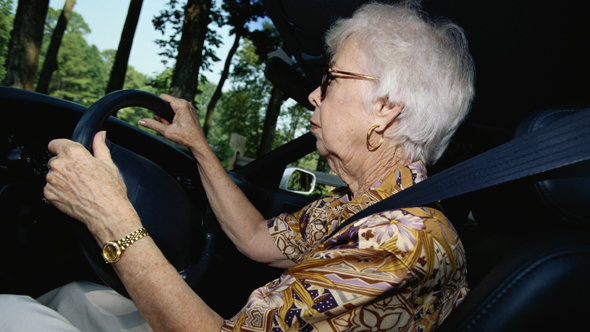
Slower reactions, aches and pains, and reduced mobility can all cause problems for older drivers, and that makes choosing the right car even more important.

We take a look at some of the features and functions you should look for in a new car to help you stay comfortable and safe on the road.

Comfort
There's nothing wrong with a little comfort, and these days many manufacturers provide drivers with the ability to find their perfect driving position. Look for a model that allows you to adjust the seat height and offers good lumbar support. Some vehicles also give you the option of heated seats, which can help ease back aches and pains when driving long distances.

Size
On the one hand, you might be tempted to go for the superior visibility and feeling of safety offered by a chunky 4x4. On the other, you may feel that a dinky little hatchback is more manoeuvrable. But the truth is, the height of the former could pose problems getting in and out, and the latter doesn't afford you much room to move. Instead, consider the happy medium of a mid-sized car and save yourself discomfort in the future.

Safety
These days cars come with a whole host of handy little technological features, and some can help you to stay safer on the road. Collision warning systems that alert drivers to a potential incident can be a great help if your reaction times are not too sharp, and some will even go one step further by automatically applying the brakes to minimise the effect of a collision.

For those who have difficulty turning or have reduced upper body mobility, a blind spot warning system will reduce the chances of problems to the side and rear of the car, and parking censors make life a lot easier. In fact, these days the likes of Volkswagen, Audi and Volvo have developed technology that does all the parallel parking work for you.

An easy life
As well as improved safety and comfort, most modern cars are designed to make life easy for drivers. For older people, simple, clear displays and gauges are a good choice, and controls on the steering wheel itself allow drivers to operate the stereo and air con without searching the centre console while on the road. Other useful features include auto high-beam technology, which automatically dips the lights for oncoming traffic, and auto-dimming rear and wing mirrors can help to reduce glare during night driving.
Lastly, don't dismiss the automatic gearbox option. These allow you to concentrate on the road without worrying about changing gear, and are an excellent choice if you are looking for a second-hand car, since they can often be picked up much more cheaply than their manual counterparts, and typically with much lower mileage.

Ultimately, which car you choose will depend largely on your personal preferences and needs, but it is worth doing your research to find a vehicle with features that could make your driving experience a safer, more comfortable and enjoyable one.

Are you a mature driver? Which features are your must-haves?

Monday, 24 February 2014

Good IAM advice when travelling with kids

Are we there yet?

Forget changing the channel on the radio or eyeing up the talent on the pavement, kids in the car make it all too easy to take your eyes off the road.

If you've got a getaway planned for Easter, plan ahead so you keep the littlun's quiet and contented - especially on long journeys.  The trick is to keep them occupied as much as possible and to keep your attention on the road.

A second adult to look after the children makes a huge difference, leaving the driver to drive. This also may allow you the opportunity to share the driving if you're heading somewhere far away from home.

However tempting, don't turn round to deal with fighting kids.  Find somewhere to stop first. If anyone needs to pick up a child, make sure you stop and don't let any adults travel with a child on their lap.

Portable games consoles or in-car DVD players will keep kids occupied for hours. But add some headphones – the soundtrack on the monitors can be just as distracting as the kids.  You might like the Spongebob Squarepants tune now, but after a few plays in the car it'll really get on your nerves.

If you are planning a long journey, make sure you're organised, remembering to pack plenty of food and drink. Have a plastic bag (without any holes) at hand for travel sickness.

Play games that promote and reward quiet behaviour without needing the driver's direct involvement.

Always leave a gap of at least two seconds between you and the car in front. Following too close cuts the time you'll have to react should something happen. You'll be more able to spot hazards and keep your kids safe.

Allow extra stops. Find somewhere for them to let off steam such as a playground.

Don't forget that child seats or restraint must be used. Check the rules but, depending on their age, some sort of seat or restraint should be used until a child reaches the age of 12 or 1.35 metres in height.  Never put a rearward-facing baby seat in the front if there is a passenger airbag.

Wednesday, 22 January 2014

Give breakdowns the hard shoulder


It's a moment of dread. The engine's making strange noises, the stench of burning is in the air and a light you've never seen before is flashing on the dashboard. You're breaking down.

Nowhere is this more frightening than on a motorway, where traffic charges along, often well in excess of 70mph.

If you break down pull over on to the hard shoulder and stop as far to the left as you can. Point your wheels in towards the kerb – if another vehicle hits your car from behind, it is better that your car is pushed into the crash barrier, than out into the traffic.

Turn on your hazard warning lights and get yourself (and your passengers) out of the vehicle by the left-hand doors. If you have them, put your reflective jackets on. You should never use a warning triangle on the hard shoulder.

While motorways are our safest roads, the hard shoulder is probably the most dangerous place to be. When out of the car get as far away from the road as possible, behind the crash barrier, and up the bank if there is one.

Driver location signs – small marker posts at the side of the carriageway, or large blue signs every 500m – give you precise information on where you're located. While they may not mean anything to you, take the details of the nearest one to give your breakdown provider, if you have a mobile. If you don't have your phone, follow the arrows on these posts – they point you to the nearest emergency phone. If this phone is broken, never try to cross the carriageway to the phone on the other side. Walk to the next one. There are numbers on all telephones that locate you precisely as well. Don't attempt even simple repairs yourself – your breakdown engineer will be trained in working as quickly and safely as possible.

If you feel threatened by someone, get back in your vehicle on the left-hand side, lock all of your doors, and call 999 from your mobile. Get out again as soon as you feel the danger has passed, and tell the police or your breakdown provider if you feel vulnerable, especially if you are alone at night.

While you can't always avoid a breakdown, making sure your car is properly prepared helps. Before you set off make sure all of your windows are clean, and that your lights are working. Check your tyre pressures, tread depth, and condition, particularly for cuts and bulges in the side wall – a blow-out on the motorway could be fatal. And make sure your windscreen wash is topped up. As well as being a legal requirement, it only takes a bit of spray to wipe out your vision completely.

Thursday, 2 January 2014

Floods


River Medway in Maidstone. (pic Twitter @ourmaidstone)


For some a Merry Christmas and a Happy new Year was not possible this festive season. Storm conditions in many parts the country brought misery to many. Kent experienced some of the worst conditions of all over the Christmas period. Yalding, Tonbridge and Maidstone amongst others was hit hard. The River Medway bust it's banks in many areas along its route. The bridge at Teston completely submerged and Tonbridge and Maidstone flooded. Recent figures released by the AA and the Environment Agency suggests that 54% of drivers would risk driving through flood water. Not surprisingly its male drivers likely to risk it, but surprisingly it's not young drivers who would take the biggest risk. The over 55's would drive through the deepest flood water!  

Medway River claiming a leisure boat and later Bridges Restaurant.
(pic: Twitter @kmfmnews) 
What can you do when faced with flooded roads? Best and probably the only advice is turn around and find alternative route. It only takes 15cm of fast moving water to knock a person off their feet. 30cm of water can move a standard size car. The risks are simply not worth it. AA / Environment Agency say that 32% of flood related deaths are in a vehicle. If your caught in flood water, get out, get to a place of safety and if necessary call for help. 

Of course, in storm conditions it's not just flood water that poses a hazards on the roads. Surface water will become a problem, especially on faster moving sections of road, like dual carriageways and motorways. Keep your speeds down, double your breaking distance and keep both hands on the wheel! If you do hit standing water and start aqua planing, don't brake!, simply lift you foot of the throttle. Braking hard while aqua planing increases the risk of skidding. If any of the wheels lock up during aqua planing when the tyre makes contact with the road surface again the chance of one wheel locked and others not might send the vehicle into a swerve and thus into a skid. Anti-lock breaks might help, but they can do only so much. 

Teston bridge disappeared in the flood water
(pic: Twitter @SkyFlyVideo)
Also don't using cruise control. Some vehicles have been know to try and maintain speed when the vehicle is aqua planing, and tries to increase speed when the wheels are not in contact with the road surface. Other vehicles cruise control would drop out, but unless it's detailed in your owners manual, it really is not worth the risk leaving it on to find out. 

Good tyres is a must. Aqua planing happens when water can not disperse under the surface of the tyre. The groves in the tyre helps to disperse that water. Deeper the grove the more water can get in between the grip and thus less water under the part that should be in contact with the road. So therefore if your running at the legal limit or indeed below, you'll have greater chance of aqua planing. Correct inflation is also important to reduce the effects of aqua planing too.  Remember, the area the size of a CD or DVD is the only part that is in contact with the road surface. 

Debris on the road poses a threat to drivers too.  Keep an eye out for anything in the road. Look ahead to your limit point, the point you can see furthest ahead in the distance. If visibility is reduced, reduce your speed. Remember, you should be able to stop in the distance you can see to be clear. 

Sainsbury's car park in Tonbridge took the full force of the floods.
(pic: Twitter @TheDukeofSutton)
Clear view is also a good idea. Obvious, yes. But a number of drivers who set of in the mornings with misted windows, not just side windows, but windscreens is shocking. Figures have shown that most accidents happen within three miles from home. If your de-misting your windscreen during those first three miles, you'll be increasing the risk rather more. (we're not suggesting you start de-misting after the first three miles either!)  Clear your view before you set off is very important and not to be under estimated.  


Speaking of seeing clearly, it's worth switching your head lights on too. Don't rely on Day Light Running Lights either. Most DRL do not eliminate at the rear. Being seen from the front and back is important too. 

Carry some extra supplies too.  Some water both for vehicle and people in the car is worth a consideration. Maybe high energy drinks too. A little food, again something high in energy. A travel blanket or something extra to keep you warm just in case you do have to walk any distance either back home or to a phone to summon some help. Also give yourself extra time for your journey. Don't leave home at the last minute only to find your route is blocked or you run into bad traffic. Check online traffic reports before you leave (not while your driving) These can be found at The Highways Agency, The AA and the BBC. Flood advice and reports can be found at the Environment Agency website.

And if the weather is that bad, ask yourself, "Is my journey really worth the risks?" 

Monday, 16 December 2013

Fantastic, misty fogs

Fog is arguably one of the most difficult conditions to drive in. Decreased visibility has an obvious impact on the way you drive your vehicle. That's why it's important to make sure you are prepared so that you can carry out your journey safely, and allow lots of extra time for the trip.

Before setting off, clean your windows and windscreen inside and out. This will clear off any residue or moisture which may affect your visibility. Ensure all your lights are working. 

When you're ready to leave, switch on the dipped headlights. Use front and rear fog lights if visibility is less than 100 metres, but don't remember to switch them off when visibility improves – leaving fog lights on when headlights would be adequate is an offence. It can also dazzle and confuse other road users – so it's important to be considerate and switch off the fog lights in good time.

Use your windscreen wipers on an intermittent setting to clear moisture. Keep your windscreen washer topped up with screen wash. In freezing fog pure water will freeze on contact with the screen.

Switch the heater or air conditioning on and leave it running to keep the inside of the glass clear.

Slow down and keep enough distance between yourself and the vehicle in front - make sure you can stop safely within the distance you can see to be clear. Following a larger vehicle like a bus or a lorry can be beneficial as they are easier to see and will generally have better visibility than you do, but don't follow too closely. You still need to concentrate on what's going on around you. And be aware that fog is not the same density all the time – it may get thicker, so slow down if it does.

Fog is not the same density all the time – it may get thicker, slow down if it does.

Brake gently but earlier than usual so your brake lights warn drivers behind.

Be aware that other vehicles may be travelling without their lights on, so extra care and attention is needed. At junctions, wind the window down and listen for traffic.

Straining to see through thick fog will quickly make you tired – take regular breaks.

If you can't see well at a junction, wind the window down and listen out for the traffic before pulling out.

Take high-viz clothing in case you have to leave the car.

Don't underestimate the effect fog has on your visibility. Adjusting your driving to the weather conditions will help you to become a safer and more confident driver through the winter months.

Friday, 6 December 2013

Driving home for Christmas

Chris Rea's Driving Home for Christmas is a song that resonates with many at this time of the year. While it's the time to spend with family and friends, many of us will be embarking on a car journey home before we enjoy the festive cheer.

But before you make that journey home, it's important to do a few checks to the car.

Start off by preparing your vehicle. Check tyre pressure, top up your washer fluid and make sure all your lights are working. This is important to ensure you don't have any unexpected issues during your journey.

Plan your drive home by checking the weather conditions both for where you're travelling from, and your destination. Check updates on the radio during your journey, and take a map so you can re-route if you need to.

If you're not driving home alone, try to share the driving, especially on long journeys.

Take regular breaks. It's advised that you take a break every two hours, to maintain concentration while driving. Stop off at a service station, if only to stretch your legs and use the facilities.

If you're going to have some passengers, especially children, it's always a good idea to pack enough food, books and games to keep them occupied.

Just in case you have any issues along the way, let someone at home know when you plan to arrive.

Take it easy and enjoy the trip home. But be careful and watch out for other road users and give them plenty of room and consideration. It's the time of year to be especially forgiving and considerate to one another.

 In case the worst happens, ensure that you have plenty of fuel. Pack an emergency kit of spare clothes, a shovel, water and food, ice scraper, reflective jacket and fully charged mobile phone with your breakdown provider's details programmed in. It is also a good idea to carry with you any regular medication you take – your journey may take longer than planned.

So what's your favourite Christmas song to listen to in the car? Or do you prefer to listen to anything but Christmas songs? Let us know at press.office@iam.org.uk.

Monday, 2 December 2013

Cruise Control - Driving in the rain

                                                                                                               
Incident:
A 36 year old female had an accident last year.  It was raining, though not excessively when her car suddenly began to hydro-plane.  She was not seriously injured but very stunned at the sudden occurrence!  When she explained to the Police Officer what had happened, he told her something that every driver should know:
NEVER DRIVE IN THE RAIN WITH YOUR CRUISE CONTROL ON.
She thought she was being cautious by setting the cruise control and maintaining a safe consistent speed in the rain...But the Police Officer told her that if the cruise control is on, your car will begin to hydro-plane when the tyres lose contact with the road, and your car will accelerate to a higher rate of speed making you take off like an aeroplane. She told the Officer that was exactly what had occurred.
 
Analysis:
In addition to the information given in the incident account, is the issue that if hydroplaning does occur it can get worse due to the maintenance of speed of the cruise control further worsening the situation. What also isn't mentioned is that to disable the cruise control normally you need to press the control paddle (lever) or brakes and most people will hit the brakes.  In a hydroplane or skid situation braking is exactly what you don't want to do (especially in a vehicle without ABS or anti lock brakes). The safest situation here is to disengage cruise control using the paddle and actually to take your foot off the accelerator and slow the car counteracting the skid and regaining traction.